2026 ASLA Oregon Design Awards
Professional, Student, and Recognition Awards will be announced at the Annual Design Awards Soiree, held this year on Friday, October 16, 2026, at Gray Gables Estate in Portland.
Register for the event here.
EVENTS
Professional, Student, and Recognition Awards will be announced at the Annual Design Awards Soiree, held this year on Friday, October 16, 2026, at Gray Gables Estate in Portland.
Register for the event here.
Click here to register
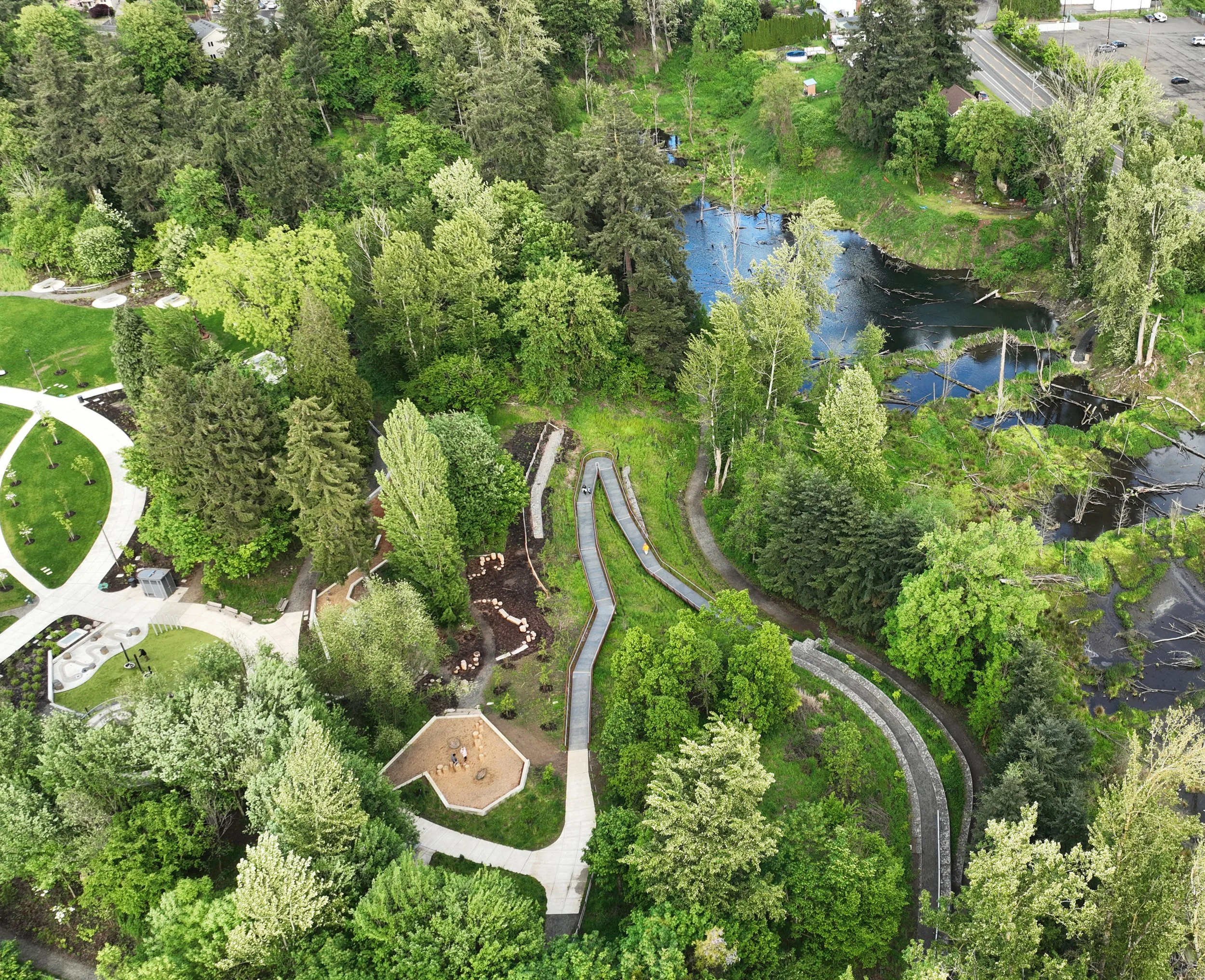
Join the ASLA Oregon Climate and Biodiversity Action Committee for an informative, guided tour of an award-winning, hybrid park co-led by Michael O’Brien, Associate Landscape Architect at Mayer/Reed and Ross Swanson, Capital Project Manager at PP&R.
The design of Errol Heights Park skillfully addresses climate action and biodiversity, transforming an underutilized landscape into a climate-positive, biodiverse, and community-rooted public space.
Carbon Drawdown
A net gain of 257 trees and a strong focus on native plantings make Errol Heights Park a model for carbon capture. Native and climate-resilient species reduce water use to the establishment period only. In the lowland natural area, low-impact gravel trails protect existing tree roots and limited heavy machinery impacts during construction. By prioritizing walking and biking access—and omitting parking—the park supports low-carbon transportation.
Climate Resilience
The park provides a shaded, green refuge from rising temperatures. The preserved mature canopy combined with newly planted trees will reduce urban heat for decades to come. The design concentrates development on upland terrain, safely distanced from fluctuating water levels. A splash pad offers a cooling feature. Slope stability is achieved by removing unconsolidated fill at a former illegal dump site and supporting the regraded slope with gabion walls. A preserved natural area, expansion of existing forest canopy and addition of native and pollinator plants support wildlife on land and in water. The park supports people’s health and wellbeing with highly accessible, inclusive experiences—from quiet nature immersion to vibrant community gathering—and enhances food security with a protected community garden and new fruit trees.
Come learn more about this vibrant park’s ecosystem services, biodiversity, and role in community empowerment!
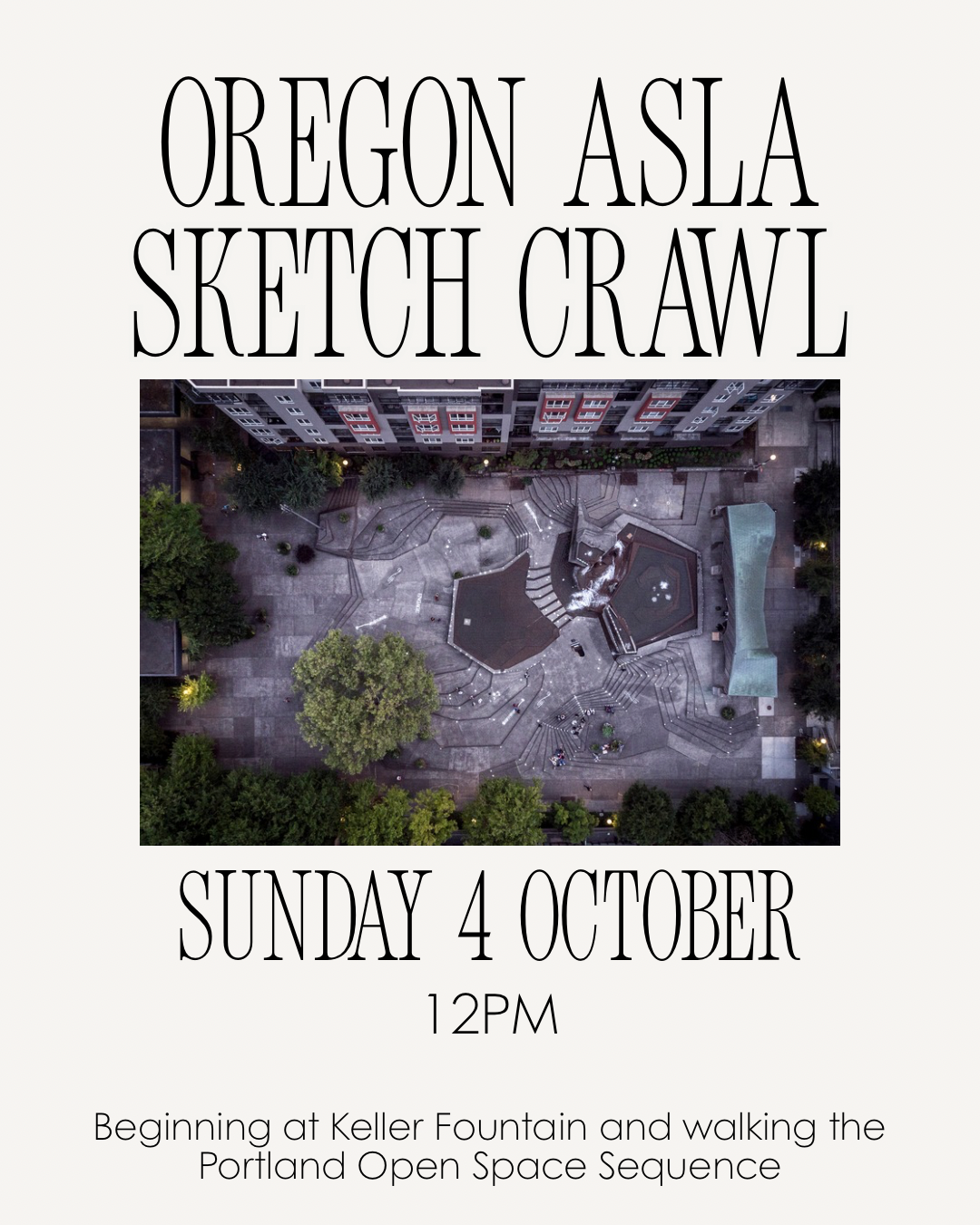
Join ASLA Oregon Emerging Professionals to sketch and explore Portland’s Open Space Sequence, featuring several iconic Lawrence Halprin parks. We’ll meet at Keller Fountain and experience these landscapes through drawing, observation, and discussion.
Bring a sketchpad and pens!
Click here to register
ASLA Oregon Mt. Hood Section, in partnership with Sarah Kwon from Victor Stanley, is holding an in-person Trivia Night gathering at a location to be determined
Free Admission: Costs covered by Victor Stanley
Winning prize includes up to four all-expenses-paid trips to Washington, D.C., to tour Victor Stanley facilities, meet with company leaders, and tour Capital Mall sites. The winning team will also leave with a $100 gift card.
Modified ‘Jeopardy’ style with challenging categories with teams of 4 ASLA members.
Design Assistance Teams: Six Decades of Community Impact
The Architects Foundation’s Design Assistance Team (DAT) program brings together volunteer professionals and citizens to build strategies that solve the most pressing issues facing the places we call home. DATs represent one of the most impactful investments ever made in communities by the architecture profession and one of the most influential investments ever made in urbanism. The program has a six-decade track record of demonstrated success with tens of thousands of volunteers and citizens working hand in hand to benefit communities. Today, the initiative has included direct work in over a dozen countries across 5 continents, including communities in 47 US states. It has profoundly impacted how our profession approaches communities, with its methodology widely adapted to fuel thousands of additional processes and a global participatory urban movement in recent decades. This session will introduce the core elements of the methodology that have made the program so impactful and describe the 2027 Call for Applications process.
Register here.
Click here to register
CEU: 1 HSW credit
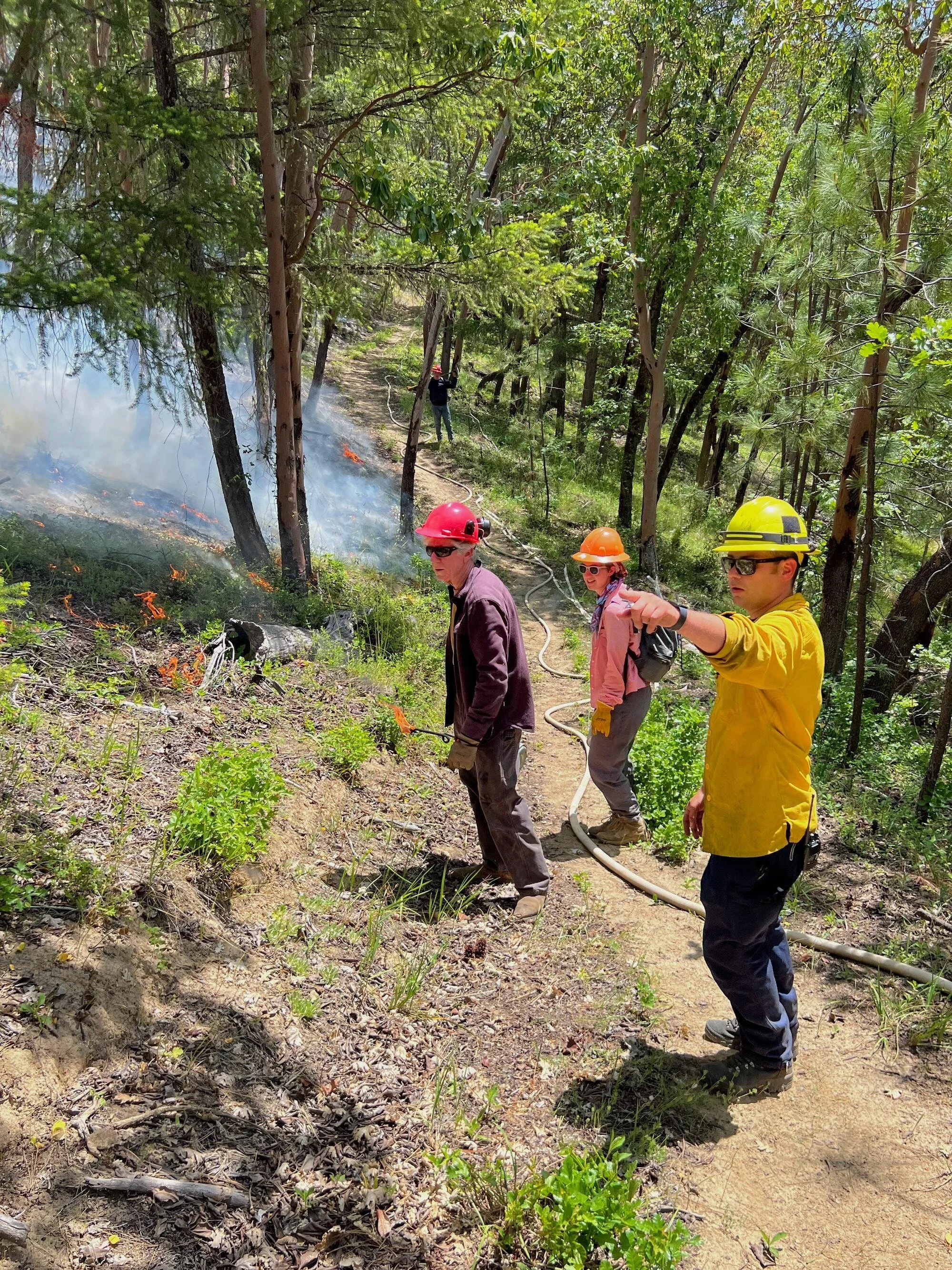
Interest in prescribed burning is growing, as across the U.S. the practice is recognized for reducing fuel buildup, improving ecosystem health, and supporting community resilience and conservation efforts. However, the accessibility of prescribed burning as an option for private landowners varies widely across the West and across Oregon.
This webinar will help landscape architects, land managers, and private property owners to understand their options for implementing prescribed burning on private property and empower them to take steps towards using fire as a management tool in appropriate settings.
Speaker: Christopher Adlam, Regional Fire Specialist, Southwest Region, Oregon State University (OSU) Extension Service
Christopher Adlam is Assistant Professor of Practice and Regional Fire Specialist for Southwest Oregon in the OSU Forestry and Natural Resources Extension, with a PhD in Ecology from the University of California Davis. He uses Cooperative Extension tools to support the emergence of fire-adapted communities in southwest Oregon. Through education and partnership building, he empowers landowners, organizations, land managers and tribes to use prescribed burning, forest restoration and range management approaches that promote resilience to wildfires, ecological fire management, and socio-cultural benefits.
AIA Eugene, CSI Willamette Valley Chapter, and ASLA Willamette Valley Section welcome you and a guest to our Annual Summer Social. AIA, CSI, and ASLA Members and their +1 are free, as well as kids 12 and under. Additional kids from 13+ are $10. Non-members / additional adult guests (21 and over) are $25. Each adult ticket includes one (1) complimentary drink ticket, good for beer, cider, or wine. Food and non-alcoholic beverages will also be available.
Click here to learn more and register
Cities have traditionally been designed as engineered systems focused on efficiency, movement, and growth. But what if our infrastructure functioned more like a living ecosystem?
Drawing from Indigenous ways of knowing, advances in biomimicry, and current work with the Biomimicry Co-Lab, architect and planner Jeff Roberts, AIA explores an emerging framework for regenerative urban design. Through the conceptual design of the Center for Tribal Nations within Portland's OMSI District, the presentation illustrates how ecological intelligence, cultural identity, and community stewardship can reshape infrastructure from isolated systems into living networks that support both people and place.
Rather than asking how cities can become more sustainable, this session asks a more fundamental question: How can our cities become living participants in the ecosystems they inhabit?
Click here to learn more and register
Join us for a presentation on the Williams & Russell Project in Portland’s historic Albina neighborhood, where we’ll explore how community-led planning, equitable development, and thoughtful urban design can transform a site shaped by urban renewal into a vibrant mixed-use district. Learn how the project integrates affordable housing, businesses, public spaces, sustainability, and community ownership to create a model for reparative development and lasting neighborhood resilience.
Join ASLA Oregon’s Emerging Professionals for a guided walk through Laurelhurst Park, one of Portland’s most iconic historic landscapes. Together, we’ll explore the park’s history, design, and enduring influence on Portland’s public open space system while discussing the principles of landscape architecture that continue to shape its character today.
This event is open to ASLA members, students, emerging professionals, and anyone interested in learning more about the built and natural environments around us. Whether you’re looking to connect with colleagues, expand your understanding of landscape architecture, or simply enjoy an afternoon in the park, we encourage you to join us. Feel free to bring a sketchbook, camera, dog, family members, or friends—all ages are welcome.
We look forward to exploring, learning, and connecting with you in one of Portland’s most treasured public landscapes.
Click here to register. 1 HSW LACES Credit Pending
Ralph Bloemers, director of Fire Safe Communities for Green Oregon, has worked for over 20 years with scientists, tribes, and conservation groups throughout the Pacific Northwest on the conservation of our forests, including burned landscapes. He has investigated the causes of fires, documented wildlife and recovery in burned landscapes, and worked to help communities prepare for more fire in a hotter, drier world. In this June 9 webinar, Ralph will share his knowledge and insights to address topics such as the difference between wildfire and community fire, how homes actually ignite during wildfires, lessons from post-fire evaluations, research, and building science, and the role of landscape design in creating fire-adapted communities. With the right knowledge and preparation, landscape architects and designers can lead the way in creating site-scale landscapes that are beautiful, livable, habitat-friendly, and wildfire prepared.
Part of the ASLA Oregon Climate and Biodiversity Action Committee Fire Talks series. https://www.climate-aslaoregon.org/fire-talks
Speaker: Ralph Bloemers, Director of Fire Safe Communities at Green Oregon Alliance
Click here to register
Location - Virtual
The 2020 wildfires in western Oregon burned nearly 1,000,000 acres and over 6,000 structures. Landscape Architects, planners, land managers, and all residents of Oregon should anticipate such events and prepare for them. How can we design and plan to reduce the risk of rare yet potentially catastrophic wildfires while supporting other needs? What can we do immediately, and what might we do over the next 20 years to prepare for the next 50 years of climate change? This talk will explore how land use and stewardship changes set the scene for our current dilemma and what practical steps we can take around our homes, neighborhoods, and public spaces. These steps include building trust and capacity among residents, NGOs, and public agencies to restore substantial areas of fire-adapted ecosystems on public and private land using prescribed fire.
Presenter: Bart Johnson, Professor Emeritus, Department of Landscape Architecture, University of Oregon
1 HSW LACES Credit pending
Click here to register
The May Urban Design Panel welcomes Metro staff who are leading the region's Future Vision Project, which brings communities across greater Portland together to create a 50-year visionary outlook for the region. The Future Vision will set the course for policies, programs, and projects that will work toward a better future for the greater Portland region. It will touch on a wide range of topics, from land use, transportation, and our economy to housing, climate, nature, arts, and culture.
Come learn how you can shape the future of the region, and before you do that, participate in the project by taking the community survey open through May 15!
This year's theme, Reclaim, invites us to look closely at the landscapes shaped by industry, time, and change—and to consider how they can be revived, restored, and reimagined for the public good. Tacoma’s evolution from working waterfronts and rail corridors into beloved parks, restored shorelines, and cultural landscapes illustrates the power of design to reconnect people with place. As landscape architects, we accept the responsibility to heal damaged land, elevate local stories, and transform forgotten edges into meaningful public spaces. RECLAIM calls us to this ongoing work, celebrating the creativity and commitment that shape more resilient communities.
For more registration and information, click here.
WASLA is an approved LA CES provider. Presentations will meet requirements for members and other attendees to receive credit.
We are thrilled to announce a very special event featuring the acclaimed ethnoecologist M. Kat Anderson on the topic of ‘Co-Creators with Nature: Designing Relational Landscapes.’ Best known for her groundbreaking work 'Tending the Wild', Kat will speak to the history of co-creation between earth-based cultures and the natural world, and reflect on how today’s designers and planners can help revive a culture of stewardship based on reciprocity and mutualism.
The event will be in-person only, and include a lecture and group discussion followed by an excursion into the nearby Oaks Bottom Wildlife Refuge. For the optional after-talk excursion, sturdy shoes appropriate for mud or uneven terrain are recommended.
Event is sponsored by the Climate and Biodiversity Action Committee, and we owe a big thank you to Harper Houf Peterson Righellis (HHPR), who have generously donated the use of their Sellwood office conference room. Light snacks provided.
Space is limited, so reserve your spot early! Register here.
Early bird registration is open until March 30th.
Check the event page for more information.
Click here to register
Oregon is a collection of diverse geography and ecosystems. Fire ecology varies by ecosystem and cannot be treated the same across the state. Unique, place-based knowledge is required to foster fire-adapted communities. This session will provide an overview of ecological relationships with fire by vegetation type, introduce the concept of historic fire regimes, and discuss factors such as land management, climate change, development of the wildland-urban interface (WUI), and invasive species that have changed the context and behavior of wildfire today.
Speaker:
Micah Schmidt, Regional Fire Specialist, Northeast Region, Oregon State University (OSU) Extension Service
Click here to register and more information
The City of Portland Bureau of Planning and Sustainability (BPS) and Mayer/Reed will share the findings from the Central City Waterfront Urban Design Study, which identifies opportunities for urban design interventions and redevelopment along the Central City waterfront of the Willamette River. This collection of strategies is intended to focus public investments, facilitate private development and support community initiatives in the district east of 4th Avenue in Old Town/Chinatown, Downtown and South Downtown. The menu of ideas presented will vary from interim, temporary and tactical treatments to more permanent medium-term projects.
Join us for an exciting opportunity to introduce high school students to the field of landscape architecture at the NW Youth Career Expo! Students will be exploring career booths, and we would love for you to represent ASLA and share your passion for the profession.
Our booth will feature engaging display boards showcasing the impact and possibilities within landscape architecture, along with meaningful conversations to help guide students as they consider their future careers.
We’ll have snacks and drinks for volunteers and plants to give away to students. Even an hour or two of your time would make a big difference.
If you have any questions, please reach out to studentliaison@aslaoregon.org. We hope to see you there!
Learn a bit about Bend water history and geohydrology, our water sources and water conservation efforts, and engage in discussion about how the landscape industry plays a crucial role in efficient water use. Topics will include right-of-way landscapes, water waste, and important synergy between water conservation, trees and firewise efforts.
Please RSVP to highdesert@aslaoregon.org if you plan on attending.
Click here to register
The Reconnecting Albina Planning Project (RAPP) will create urban development strategies for Lower Albina that foster equitable and sustainable outcomes, centered on restorative development for Portland’s historic Albina and Black communities. Funded through a Federal Department of Transportation Reconnecting Communities grant, Reconnecting Albina is an approximately two-year project likely to be completed in the fall of 2026. The project will create an updated land use and transportation framework to support equitable urban development in Lower Albina.
Albina Vision Trust (AVT), the Portland Bureau of Planning and Sustainability (BPS), Portland Bureau of Transportation (PBOT), and Prosper Portland will collaborate to establish, align, and leverage partnerships and investments that support redevelopment opportunities in the district, including on the new I-5 highway cover being developed by the Oregon Department of Transportation.
Following an Open House event in December 2025, the project team is in the process of reviewing community feedback and planning another series of engagement events in the late spring/early summer 2026. This engagement, and subsequent analysis, will help inform the final project deliverables which include a Community Participation Plan (CPP) and a Development Framework Plan.
Speakers – City of Portland Bureau of Planning and Sustainability
Cassie Ballew, City Planner, Urban Design
Cassie has over 15 years of combined experience in planning, urban design and architecture. Her experience includes work as an architectural designer, as a planner conducting permit and land use reviews and as an urban designer, working on the development of design standards, guidelines and concepts for large area plans in Portland. Cassie previously helped lead the development of the urban design framework and character statements for the River Plan South Reach, West Portland Town Center and Montgomery Park Area Plans.
Mike Serritella, Senior Planner, Transportation
Mike brings a decade of public-sector planning experience in Portland, building on a second career in teaching and education advocacy in New York City and Denver, Colorado. His interdisciplinary background informs a people-centered, equity-driven approach to urban design and transportation planning, with a focus on creating safer, more vibrant, and more accessible streets and public spaces.
At the Portland Bureau of Transportation (PBOT), Mike has led major corridor- and district-level planning efforts including Northwest in Motion and North Portland in Motion, as well as key streetscape projects on N/NE Broadway and Willamette Boulevard. Across his portfolio, Mike integrates transportation, development, and public space design with community engagement and interagency collaboration to achieve practical, equity-focused outcomes.

Click here to register. Space is limited to 75 people.
SITTING STILL brings into focus the critical issues which have defined Olin’s life and work: urbanization and our lost connection to nature, economic marginalization, and the grave importance of humanity in design.
In a time when global values increasingly reflect “profit over people,” Olin's motivation has always been to create a more democratic and egalitarian society through healthy, shared public space. Environmental and human stakes have simply never been higher. In many ways, the most pressing challenges of the natural environment and social disunity can be healed through the power of landscape.
SITTING STILL invites the voices of other design luminaries into the conversation, including architectural visionaries Frank Gehry and Billie Tsien, and esteemed landscape designer and artist, Walter Hood, among others.
A post-event social will take place at Hi-Top Tavern from 7 - 9 pm.
The screening is sponsored in part by Northwest Playground, Inc.
Click here to register
The December Urban Design Panel welcomes Brian Squillace, Principal of Bora Architecture & Interiors, and Amanda Ufheil-Somers, Project Manager at ECOnorthwest, to share more about Social Housing Models in practice. In September, Brian and Amanda joined a local contingent of housing professionals and thought leaders, who participated in an educational trip to Vienna, Austria to learn more about the city’s existing housing stock.
Vienna’s system of housing promotion is globally recognized and one of most important tools for continuing to provide a sufficient quota of affordable dwellings despite rising demand. Today, approximately 60% of the Viennese population lives in subsidized dwellings – either in one of the 220,000 municipal units or in one of the 200,000 limited profit flats built with municipal subsidies.
Showcasing Vienna as a primary case study of social housing, Brian and Amanda will reflect on their travel observations, and share insights on what components of a social housing framework might be explored locally.
Oberlander Prize Forum IV: Soak It Up
Los Angeles, CA | December 4-6, 2025
Join The Cultural Landscape Foundation (TCLF), the University of Southern
California (USC), and SWA Group for a daylong conference on Friday,
December 5, 2025, at USC’s Bovard Auditorium. The program will highlight
landscape architecture’s role in addressing urban flooding and water
management in Los Angeles, Southern California, and globally. The
conference will be preceded by a reception on Thursday, December 4, at the
SWA Los Angeles studio featuring an opening keynote by Lauren Bon,
Metabolic Studio, and followed on Saturday, December 6, by mobile
workshops. Each event is separately ticketed.
Speakers include leading practitioners, academics, and critics from Los
Angeles and a panel of international speakers, including Oberlander
Prize laureate Kongjian Yu, the world’s leading proponent of the “sponge
cities” concept.
Click here to register
For the November Urban Design Panel, The Interstate Bridge Replacement (IBR) Program will share a Program update and walk through the design concepts being studied in the environmental review process. The presentation will illustrate the need for a replacement bridge, outline the design options under consideration, and show early examples of architectural elements that were informed by discussions with Program partners and feedback from the community. The presentation will also highlight upcoming milestones, including completion of the Final Supplemental Environmental Impact Statement (SEIS) and receiving an Amended Record of Decision (ROD), which provides federal approval needed to begin construction.
Participants are invited to watch the architectural elements workshop recordings from July and August in advance so they can prepare specific questions about the urban design work.
Presented by the ASLA Climate and Biodiversity Action Committee, for Sustainable Building Week
Wednesday, October 8th, 12:00-1:30pm online
The pre-colonial Willamette Valley was predominantly Oak Savannah and Prairie, stewarded through indigenous cultural practice of controlled burning. These fire-adapted, drought-tolerant ecosystems are now critically endangered, making up less than 1% of their historic range, and creating new prairie habitat isa critical way to bolster the biodiversity of native flora and fauna. Prairies also offer designers with a reference landscape that is adapted to future climate projections for the Pacific Northwest, when our summer’s will be longer, hotter, and drier. This panel will provide an overview of native prairie significance and composition, followed by design guidelines for the design and management of prairie analogs in the built environment. Drawing from restoration techniques, the panel will discuss site preparation, species selection, establishment, and adaptive management, with an emphasis on the aesthetic considerations for urban prairies and meadows. In comparison to other designed landscapes, prairie analogs can be “low maintenance,” but they still require infrequent disturbance for their longevity. This presentation will highlight how conventional maintenance regimes can be adapted where controlled burning is not possible and identify what elements can be integrated into the design to help support proper care.
Panelists
Lynda Boyer is a Botanist at Heritage Seedlings where she has managed their source-identified native seed production program. Lynda has over 25 years of experience working with designers, restoration ecologists, and land managers to facilitate restoration of riparian and prairie habitat across the Willamette Valley.
Michael Geffel, PLA, is the Research Director at Portland Botanical Gardens and Principal of LNDLAB, a design consultancy (re)directs maintenance & operations to socially activate and ecologically regenerate fallow landscapes. Prior to this, Michael was Professor of Practice at the UO College of Design where he founded the Fuller Initiative Land Lab: an award-winning and internationally recognized model of design research, education, and service.
Click here to register.
600 S Marina Way, Washougal, WA98671-9867.Park in the designated Visitor Parking areas. Walk to the Waterfront Trail and meet at the Public Lawn in front of Ninebark’s Clubhouse
Join the ASLA Oregon Biodiversity and Climate Action Committee for a tour of Eagle View Park, the 2024 Green Ribbon for Climate Action award-winning site. Explore the park with project designers from Ground Workshop and owners Killian Pacific, and discover how this innovative public-private partnership combines higher-density urban residential development with sustainable practices, compelling storytelling, and thoughtful placemaking.
Click here to register!
Touted as 'Oregon's Next Great Adventure', the Salmonberry Trail is a proposed 82-mile hiking, walking, and biking trail that will connect the Portland Metro area to the Oregon Coast. An abandoned rail line turned into a 'Rails-to-Trails' project, the Salmonberry Trail traverses through spectacular landscapes. Starting in Banks, the trail travels through the Willamette Valley, connects to Stub Stewart State Park, climbs into remote deep forests and river canyons, crosses 67 trestles, five bridges, and 10 tunnels, follows the Nehalem River to coastal towns and past estuaries, and finishes at the Tillamook Creamery. The Salmonberry Trail Foundation is tasked with implementing the vision - working with communities, partners, and Tribes - to turn the vision into reality.
Online registration is now closed. If you are not registered and want to register, please email info@aslaoregon.org.
Photo Credit: Erin Riddle/KLiK Concepts
Event information: Thursday, September 25th
11:00 am - 2:00 pm
Free
Event description: On Thursday, September 25th, we will tour (3) newer Eugene parks and learn about park and playground design within the constraints of user safety, urban conditions, and user experience.
We will meet at 11:00 at the Campbell Community Center and either carpool or travel to our park destinations by bus (TBD). Our featured parks for the tour include MLK, Jr. Park, Downtown Riverfront Park, and Umso Park (formerly Striker Field). We will wrap up our event with a picnic lunch and an informal discussion session. Food and drink will be provided by our event sponsor, Northwest Playground Equipment, Inc. Please register ASAP as our space is limited for this free event!
Registration Link:
Abstracts are due by 5 pm PST on June 20th, 2025. Abstracts should be no longer than 500 words. You are welcome to submit more than one abstract. For additional information on the Symposium please visit the Symposium website at https://www.oregonewrg.org/ewrg-symposium or contact the program coordination team at program@stormwatersymposium.org.
Click here to submit.
Announcing: the 2025 Symposium Student Poster Showcase
Through this showcase, students have the chance to win up to $2,500! Details are available on our website: https://www.oregonewrg.org/ewrg-symposium
Do you know or work with any students in the water resources field? Share this opportunity for them to win a scholarship through our Student Poster Showcase.
Early Bird Registration is open
If you're interested in sponsoring this year's event, please visit https://www.oregonewrg.org/ewrg-symposium for details or contact us at sponsors@stormwatersymposium.org.